February 14th has come (and nearly gone) again, and that naturally got us at Playing Favorites thinking about our favorite Valentine’s Day games.
Now, unlike more popular holidays, Valentine’s Day doesn’t exactly feature in many games. In fact, there are none that come to mind. But if we break down what Valentine’s Day is meant to represent—love, sex, passion, and romance—we find that, actually, there are plenty of games that fit the bill.
And with that in mind, here are our Valentine’s Day game faves:

Final Fantasy VIII
Final Fantasy VIII was my first Final Fantasy game and remained my favorite in the series for a long while, at least until Final Fantasy XII came around. Nowadays, I’d be hard pressed to rank FF8 above FF7, but I’ll never not love this black sheep of the PS1-era Final Fantasies.
And there’s plenty to love about the game: its groundbreaking FMVs, its soundtrack, its cast of characters, and its central narrative that revolves around a young couple falling in love and defying all odds and a witch who can bend spacetime to her will to be with one another.
It was the first time I can remember encountering a genuine love story in a game, and, even as a 13-year-old kid who may not have been quick to admit it, that’s what kept me going all the way through to the end of that fourth disc.
And, if we’re being honest, true love is Uematsu’s score for FF8. It’s maybe the best one he ever did and is pure prog rock bliss nearly from start to finish, breaking only now and then to deliver a legit love song from a legit pop star.

Baldur’s Gate 2
Long before Commander Shepard first said, “We’ll bang, okay?” Long before Solas crushed the hearts of players who swore they could fix him. Long before the druid bear sex of Baldur’s Gate 3, a fresh game studio out of Canada decided that, hey! Adventurers deserve love too.
With Baldur’s Gate 2, BioWare decided to reduce the total number of playable companions available to the player and instead focus on fleshing out the characters with backstory, quests and motivations of their own, and, yes, even romance subplots.
If Final Fantasy 8 was the first game that ever told me a love story, then Baldur’s Gate 2 was the first game that ever let me write my own. It was also, incidentally, the first game in which my avatar ever became a father.
I can’t be the only one who lost Aerie after naively dragging her and Jaheira into a love triangle, and I’m definitely not the only one who fell in love with the game’s characters as a result of Baldur’s Gate 2’s improved focus on narrative.
I even returned to the game just a couple years ago in preparation for Baldur’s Gate 3 and finally romanced Viconia, which is an experience every RPG fan should probably have at least once.

Catherine
When Atlus first announced their 2011 puzzle-platformer-pseudo-dating sim, they billed it as a game made by and for adults, which was still somewhat of a novel idea at that time (the Witcher 2 came out the same year and received praise for its similar approach). It’s wild to think of how far we’ve come in just 13 years.
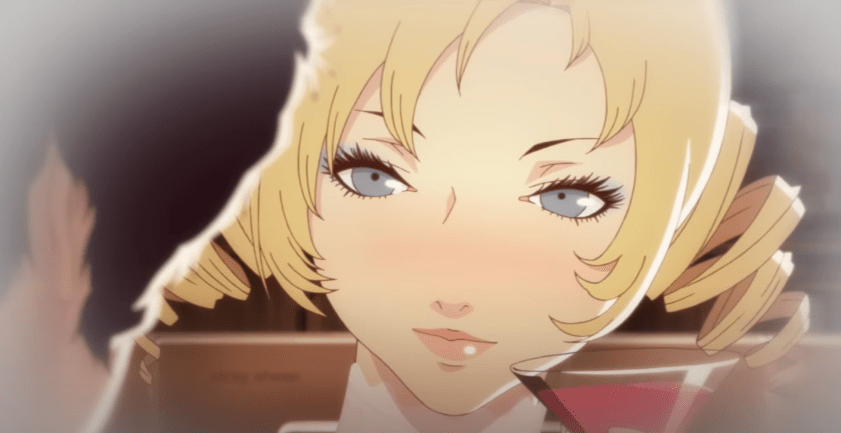
Catherine puts sex and adult relationships at the center of its plot which revolves around Vincent Brooks, a 32-year-old man averse to commitment, and two women with homonymous names: one his long-time girlfriend, and the other a young and seductive free spirit.
In Atlus fashion, the game’s story takes some wild turns that have made it an enduring cult classic to this day, despite the response to the game’s bizarre puzzling being lukewarm at best. It even got a re-release in 2019, which added a third woman to the game’s main cast.
Catherine can be a problematic game, and it’s both garnered and earned quite a bit of controversy, particularly around its handling of a transgender character in the re-release, but it’s also a fascinating title worth at least a moment of your time.
As a title that helped prove that video games could just choose to target adult audiences, the industry owes more to Catherine than you might think.
 Ashton Herrmann